Selecting the right azure region Australia offers is a critical decision that impacts your long-term cloud architecture. While that first region dropdown in Azure looks minor, it shapes latency, failover, and data residency. Pick poorly, and you can lock your team into higher recovery costs, a weaker availability design, and compromised business continuity.
For Australian organisations running Microsoft cloud services, the choice also affects identity, networking, security tooling, and app integrations around Intune, Office365, and Exchange Online. The right answer starts with understanding the real differences between the Australian regions, rather than relying on habit or default selections.
Key Takeaways
- As of 2026, Microsoft offers four Azure regions in Australia: Australia East, Australia Southeast, Australia Central, and Australia Central 2.
- Australia East serves as the primary commercial hub for production workloads that require the resiliency of availability zones.
- Australia Southeast remains a viable option for Victorian workloads and disaster recovery strategies, though it does not provide native support for availability zones.
- The Australia Central and Australia Central 2 regions are specifically designed for government workloads with PROTECTED security requirements, rather than for general commercial use.
- Choosing a specific Azure region does not automatically dictate the data residency for Microsoft 365 services, such as Exchange Online, Intune, or Office 365.
Australia’s Azure regions in 2026
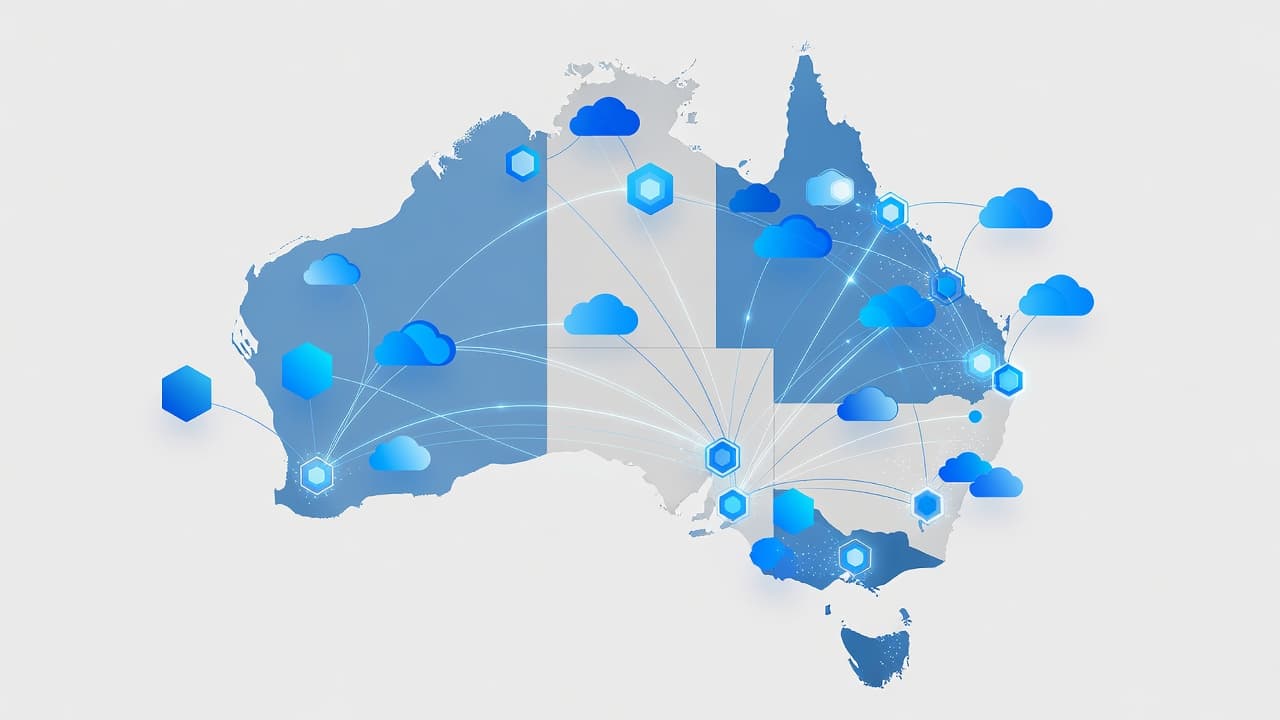
As of July 2026, Microsoft operates four Azure regions in Australia. Two are commercial regions located in Sydney, New South Wales, and Melbourne, Victoria, while two are Canberra regions specifically designed for government use cases. These physical locations house the data centers that underpin your cloud architecture.
This is the short version:
| Region | Location | Availability zones | Typical fit | Main limitation |
|---|---|---|---|---|
| Australia East | Sydney | Yes, 3 | Primary commercial production workloads | Service demand and quotas can vary |
| Australia Southeast | Melbourne | No | Commercial workloads, secondary DR region | No zone redundancy |
| Australia Central | Canberra | No | Government PROTECTED workloads | Not a general default for commercial tenants |
| Australia Central 2 | Canberra | No | Paired DR region for Australia Central | Same government-focused scope |
The big architectural split is simple. Sydney provides you with availability zones, while Melbourne does not. That one difference regarding the infrastructure of these data centers changes how you design front ends, databases, and recovery targets.
The second split is about compliance scope and geography. Australia East and Australia Southeast sit inside the Australia geography for standard commercial workloads. Conversely, Australia Central and Australia Central 2 are tied to specific government compliance standards, and they should only enter the conversation when those legal or security requirements are present.
Paired regions also matter for your resilience strategy. Australia East serves as the paired region for Australia Southeast, while Australia Central is the paired region for Australia Central 2. Understanding how these pairings operate across your chosen physical location helps with business continuity planning, but it does not replace the need for your own robust recovery design.
What should drive your region choice
Achieving low latency remains a primary driver for user experience, even within a single country. Users in Sydney typically enjoy the best performance from Australia East, while Melbourne-based users may see a slight benefit from Australia Southeast. However, physical distance on a map is only part of the equation. Carrier routing, ExpressRoute paths, and branch internet breakout can change the result, especially for teams in Perth, Darwin, or regional sites. You can see that variability in this Azure community latency discussion.
Availability is the next critical factor, as your uptime requirements dictate the entire architecture. If your application requires zone-redundant virtual machines, zone-aware load balancing, or database designs that survive a single data center failure, Australia East is the primary choice that shifts the landscape. Melbourne currently lacks that same in-region fault isolation.
A multi-zone design in Sydney improves local fault tolerance, but it does not replace a second-region disaster recovery plan.
Service availability is another common trap. Teams often assume that every VM family, storage option, and quota is uniform across the Azure global cloud. This is not the case. Newer PaaS features, GPU capacity, and niche services within Microsoft’s global infrastructure can appear in one region first or remain constrained by regional quotas. Before you commit, check the Azure region and service matrix and confirm live quotas in your own subscription.
Compliance and data residency also require a clear-eyed view. Choosing Sydney over Melbourne keeps commercial data in Australia, but it does not make Canberra’s government posture irrelevant. Furthermore, do not assume your Azure region dictates where Exchange Online, Intune, or Office 365 data lives. Those Microsoft services follow their own specific data residency and compliance rules, so you need to review both sides of your digital estate to ensure full alignment.
When each Australian region fits better
Australia East often wins for production
For most commercial production systems, Australia East is the safest default. It provides comprehensive availability zone support and boasts broad commercial adoption, making it the top choice for applications that cannot tolerate a single-datacentre failure.
This is critical for customer portals, Azure Virtual Desktop, line-of-business APIs, and SQL-backed apps that support finance or operations. A national professional services firm, for example, might run its core Azure workloads in Sydney, then integrate them with Microsoft 365, Intune-managed endpoints, and Exchange Online workflows used across the country. In that setup, the app region should prioritize resilience first, then tune latency around it.
Australia East also makes sense when you expect faster access to certain services or larger capacity pools. You still need to verify that in the portal, but Sydney is where many Australian production builds start.
Australia Southeast can be the right second choice
Australia Southeast is a valid primary region for some workloads, but you should choose it with open eyes. If most users sit in Victoria, the workload is moderately important, and zone-level redundancy is not a hard requirement, Melbourne can fit well.
It is also a common target for disaster recovery when your primary environment is in Australia East. This pattern works effectively for business continuity because it keeps recovery data inside the country while providing geographic separation from Sydney. Development, test, internal business apps, backup targets, and lower-risk web platforms often land here for that reason.
Still, if the board expects higher availability and faster recovery, Melbourne’s lack of availability zones can push you back toward Sydney as the primary region.
Australia Central and Central 2 are for a narrower brief
The Canberra regions are different. They are built around Australian Government requirements, including PROTECTED workloads, and they should not be treated as standard commercial alternatives.
If you are a federal agency, a defence-aligned supplier, or a partner with hard classification boundaries, Australia Central becomes part of the shortlist. Then, Australia Central 2 usually enters as the paired recovery region. For most private-sector organizations, these Canberra regions are not the natural fit.
Building business continuity across regions
A robust architecture for your Australian Azure environment requires a clear distinction between high availability and disaster recovery. High availability focuses on keeping your applications operational during localized faults through the use of availability zones. In contrast, disaster recovery strategies are designed to address regional-level issues, such as major outages or significant security events that necessitate moving workloads to a different location to maintain business continuity.
For commercial tenants, the standard approach is to utilize Australia East as the primary region and Australia Southeast as the secondary region. Hosting production workloads in Sydney allows you to leverage availability zones for high availability. Meanwhile, Melbourne provides the necessary geographic separation to support your disaster recovery requirements. This regional pairing facilitates effective management of Azure Site Recovery, database replication, backup vault planning, storage replication, and DNS failover runbooks.
If you choose Melbourne as your primary region, the design process becomes more complex. Because Melbourne currently lacks support for availability zones, your application will require more robust application-level redundancy or a more aggressive cross-region posture to ensure acceptable levels of business continuity. In many scenarios, this makes Sydney the preferred home for production workloads, even if a portion of your user base is located closer to Melbourne.
Government workloads are architected using the Canberra pair. Australia Central and Australia Central 2 should be planned as a cohesive unit from the initial design phase, rather than retrofitted after go-live.
Effective recovery planning also requires meticulous operational detail. You must clearly define RPO and RTO targets, conduct regular failover testing, and confirm which dependencies are regional in nature. Infrastructure components such as firewalls, private endpoints, backup policies, jump hosts, and monitoring stacks all have significant regional implications. The same logic applies to identity-adjacent tooling that supports your Microsoft workloads.
Final checklist for choosing an Australian Azure region
Use this checklist before you create your first production resource group:
- Map where your users, offices, manufacturing plants, and branch sites are located, then conduct latency tests from those specific network locations.
- Decide whether availability zones are mandatory for your workload. If they are, Australia East should be your primary consideration.
- Use the Azure CLI to programmatically verify service availability, SKU support, and subscription quotas in your target region to ensure your chosen environment meets your technical requirements.
- Separate your Azure region deployment decisions from your Microsoft 365 data residency assumptions for services like Exchange Online, Intune, and Office 365.
- Clearly distinguish between your specific data residency needs and broader regulatory compliance requirements. Remember that general commercial data residency is a different challenge than meeting Australian government PROTECTED compliance standards.
- Pick your disaster recovery region before you launch your production environment, then document your failover steps and perform regular testing.
If two options still look close, favor the region that provides you with the simpler failure model.
Frequently Asked Questions
Why is Australia East considered the primary choice for commercial workloads?
Australia East, located in Sydney, is the only commercial region in Australia that currently supports Availability Zones. This makes it the standard choice for production applications requiring high availability and protection against localized data center failures.
Can I use Australia Southeast as my primary region for production?
While you can use Melbourne as a primary region, it lacks native support for Availability Zones, which complicates your high availability design. It is often better utilized as a disaster recovery site for Sydney-based workloads or for development and testing environments.
Should private companies consider the Canberra regions for their infrastructure?
No, Australia Central and Australia Central 2 are specifically built for Australian Government agencies and partners requiring PROTECTED security classifications. They are generally not the appropriate choice for standard commercial or private-sector applications.
Does choosing an Azure region change where my Microsoft 365 data is stored?
No, your Azure region selection does not automatically dictate the data residency for Microsoft 365 services like Exchange Online or Intune. These services follow their own distinct regional data residency and compliance policies that operate independently of your Azure compute or storage footprint.
Conclusion
That Azure region dropdown is small, but it sets the shape of your platform. Selecting the right azure region australia serves as the foundation of a resilient cloud strategy, balancing performance with your specific regulatory needs. In Australia, the biggest divide is between Australia East, which offers robust availability zones, and the other regions, which require a different approach to your disaster recovery design.
Most commercial organisations will land on Sydney for primary production and Melbourne for secondary recovery. Canberra belongs in your architectural plan when government classification drives the decision. Ultimately, the best choice is the region that matches your failure model, compliance boundary, and user footprint on day one, rather than the one that simply feels closest on the map.